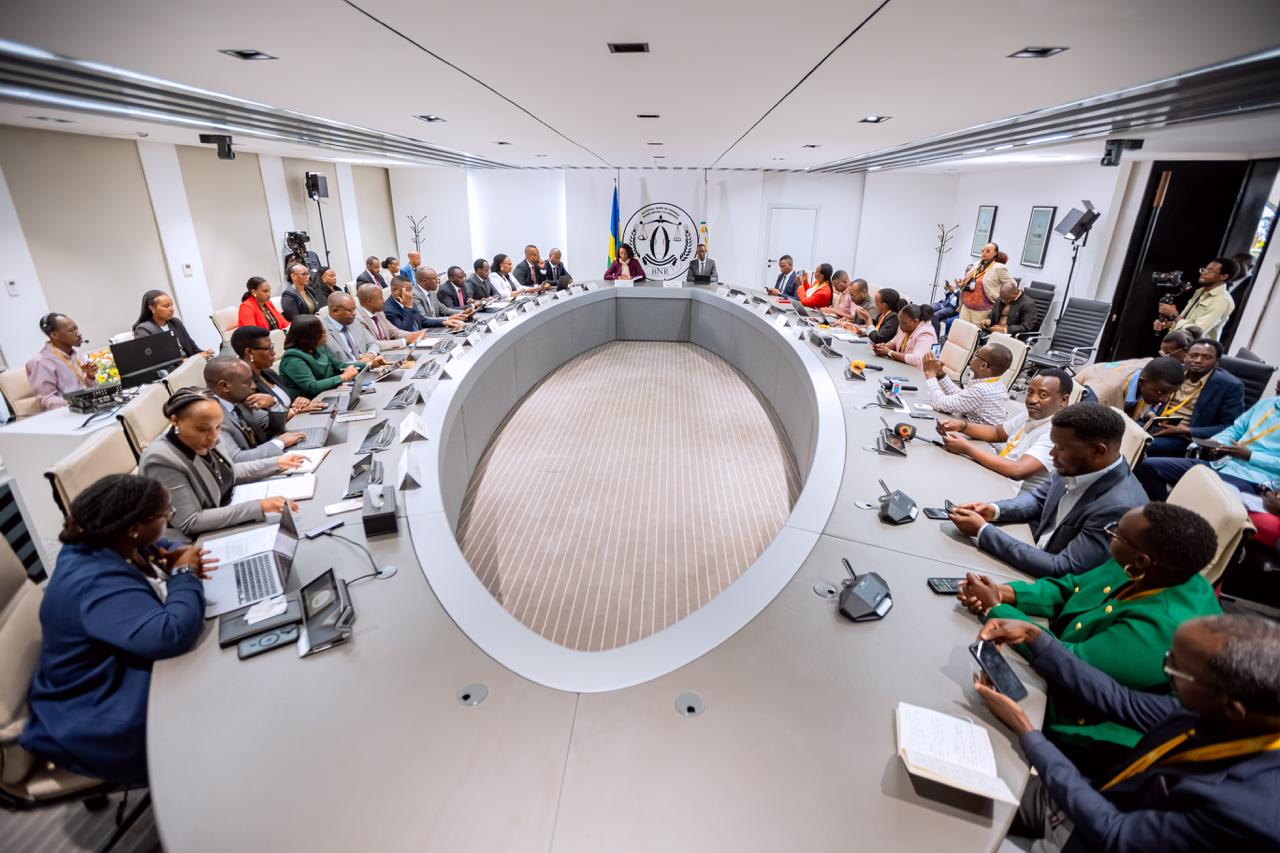
Rwanda’s central bank raised its benchmark interest rate by 100 basis points on Thursday and warned inflation will remain elevated well into 2027 as the conflict in the Middle East disrupts global energy supplies, drives up transport costs and threatens trade flows through one of the world’s most critical shipping corridors.
National Bank of Rwanda increased the central bank rate to 8.25 percent from 7.25 percent, its second tightening move this year, after annual inflation accelerated to 1 percent in April from 9.1 percent in the first quarter.
Governor Soraya Hakuziyaremye said policymakers were responding to mounting price pressures triggered by the expanding Middle East conflict, which has severely disrupted shipments through the Strait of Hormuz, a route that previously handled about 20 percent of global oil and gas supply.
“The conflict in the Middle East is therefore a major global shock, whose economic impact may worsen depending on its duration and intensity,” Hakuziyaremye told reporters in Kigali. “The direct and indirect impact of the conflict will affect domestic market prices for goods and services.”
The governor said almost no shipments had crossed the Strait of Hormuz since the outbreak of the Iran conflict on Feb. 28, compared with an average weekly flow of 4 million metric tons of goods before the war. The disruption has increased global fuel prices, shipping costs and the price of imported commodities including fertilizers and food products.
Crude oil prices are projected to rise by an average of 24.6 percent in 2026 before potentially declining by 18.6 percent in 2027 if the conflict eases, according to the central bank’s assessment. Non-energy commodity prices, including food, are expected to increase by 2.9 percent this year.
Rwanda now expects average inflation to reach 13.9 percent in 2026 before easing to 7.4 percent in 2027, remaining above the central bank’s 2 percent to 8 percent target range until the second quarter of next year.
“In view of those persistent inflationary pressures and upward revision to our inflation outlook, the Monetary Policy Committee decided to increase the central bank rate to 8.25 percent,” Hakuziyaremye said. “The decision to increase the CBR is a measured step to bring back inflation within our target band.”
The latest inflation surge has been driven by higher fuel prices, rising charcoal costs, food supply shortages linked to adverse weather conditions and broader increases in housing, restaurant and transport prices.
Core inflation rose to 9.3 percent in the first quarter, while fresh food inflation climbed to 5.2 percent. Energy inflation also accelerated sharply, largely due to charcoal shortages, though the governor said increased production in recent weeks has begun easing prices.
Despite the inflation shock, Rwanda’s economy has remained resilient, supported by strong exports, services growth and a narrowing trade deficit.
The economy expanded 9.4 percent in 2025, driven by growth across agriculture, services and industry. While first-quarter GDP figures for 2026 will only be released next month, the central bank’s composite index of economic activity showed aggregate demand rising 16.5 percent in the first three months of the year, led by trade, transport and financial services.
Rwanda’s external sector also posted unexpectedly strong results at the start of the year. Exports surged 63 percent in the first quarter, boosted by a 99 percent increase in traditional exports including coffee, tea and minerals.
Non-traditional exports rose 64.8 percent, driven by processed food products and construction materials. Imports increased by a slower 5.6 percent, helping narrow the trade deficit by 23 percent.
The stronger trade position has helped stabilize the franc, which depreciated only 0.5 percent against the dollar in the first quarter, compared with 2.3 percent in the same period last year.
“The domestic economy remains resilient, but we know there are global headwinds that we must face as an economy,” Hakuziyaremye said.
Still, the central bank warned that export momentum could weaken in coming quarters as some of Rwanda’s key export markets are affected by the Middle East conflict and global shipping disruptions intensify.
The bank also flagged declining commodity prices for Rwanda’s key agricultural exports. Arabica coffee prices are projected to fall 14.4 percent this year, while tea prices are expected to decline 2.1%, potentially weighing on export earnings.
Globally, the central bank said economic growth is expected to slow to 3.1 percent in 2026 amid heightened geopolitical uncertainty, while global inflation is projected at 4.4 percent this year before easing gradually.
In Sub-Saharan Africa, inflation is forecast to slow from 12.5 percent in 2025 to 8.8 percent in both 2026 and 2027, though the pace of disinflation remains slower than previously expected because of currency weakness and volatile food and energy prices.
Rwanda’s tightening cycle comes as several African central banks weigh how to respond to renewed external inflation shocks tied to energy markets and geopolitical instability.
Although the interbank rate has risen to 7.13 percent following February’s rate increase, commercial lending rates have edged down slightly to 15.6 percent from 15.9 percent a year earlier, supported by lower-priced long-term corporate lending.
Hakuziyaremye said the central bank would continue monitoring agricultural production, global oil markets and the duration of the Middle East conflict, warning that prolonged disruptions could force inflation even higher.
“As National Bank of Rwanda, we are committed to data-driven and forward-looking policy decisions to ensure that inflation comes back to our target of 5% in the medium term,” she said.