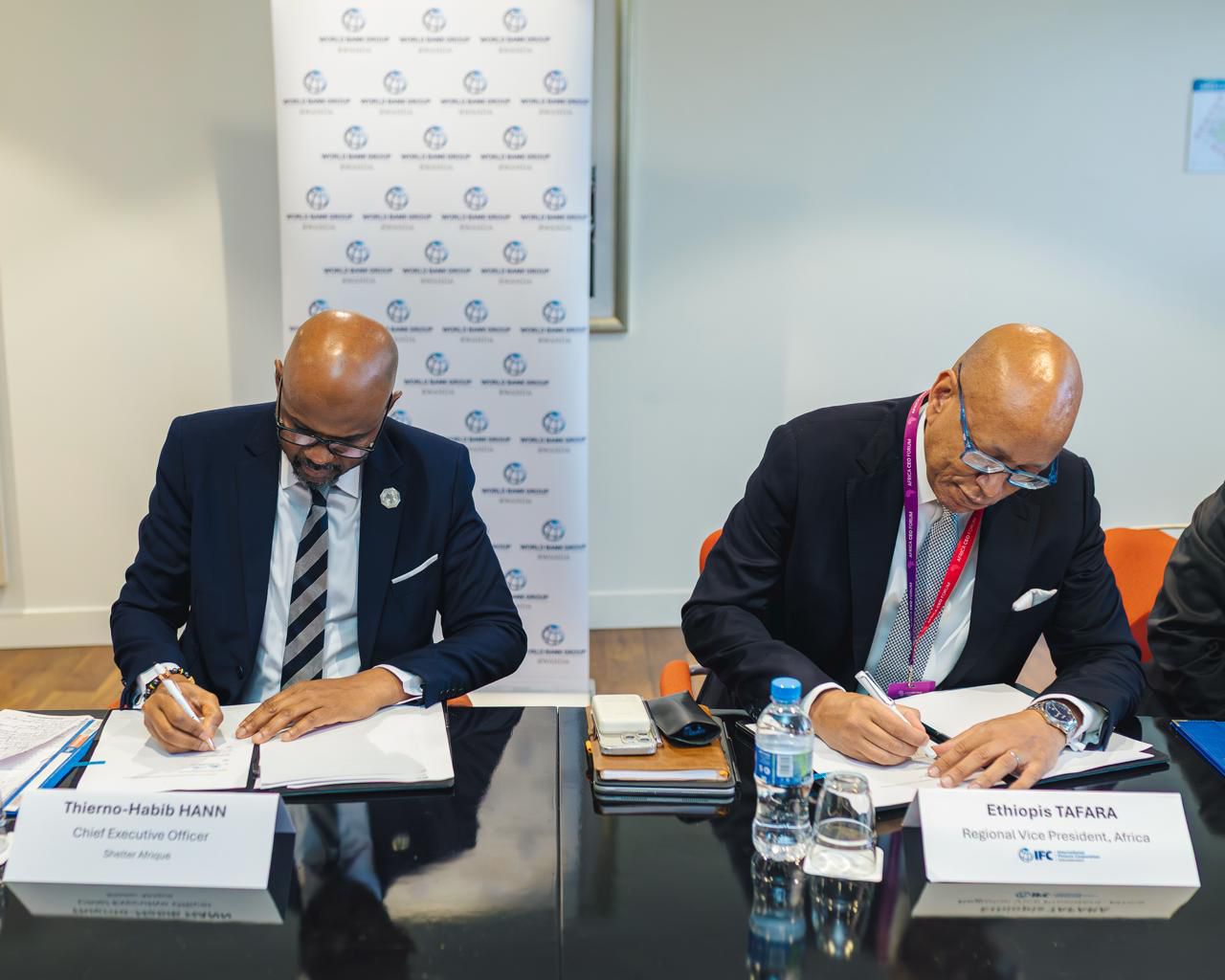
International Finance Corporation and Shelter Afrique Development Bank signed a partnership agreement aimed at mobilizing private capital for affordable housing and urban infrastructure projects across Africa, as the continent grapples with a housing deficit estimated at 56 million units.
The agreement, signed on the sidelines of the Africa CEO Forum 2026 in Kigali, comes as African governments and development financiers increasingly turn to private-sector funding and capital markets to bridge a housing financing gap estimated at about $3 trillion.
Under the memorandum of understanding, the two institutions will collaborate on financing structures, green housing development, urban resilience projects and investment-readiness programs designed to attract institutional and private investors into Africa’s housing sector.
“The signing of this memorandum of understanding with IFC marks an important milestone in our shared commitment to accelerating affordable and sustainable housing across Africa,” Thierno-Habib Hann said during the signing ceremony.
“By combining Shelter Afrique’s deep sector expertise with IFC’s global investment and advisory capabilities, we are strengthening our ability to mobilize capital, drive innovation and support impactful housing projects that improve lives and contribute to the continent’s economic transformation,” Hann said.
Africa’s rapid urbanization and population growth have intensified pressure on governments to expand housing supply, modernize infrastructure and develop climate-resilient cities. Yet many housing markets remain constrained by limited long-term financing, weak mortgage penetration and high construction costs.
The partnership seeks to address some of those bottlenecks by strengthening corporate governance frameworks, supporting capital market fundraising initiatives and building the capacity of developers in sustainable and climate-resilient construction.
Ethiopis Tafara said housing has become central to Africa’s broader economic transformation agenda because of its links to employment creation, urbanization and industrial growth.
“Housing lies at the core of Africa’s growth, driving jobs, expanding opportunity and shaping inclusive communities,” Tafara said.
“Through our partnership with Shelter Afrique Development Bank, IFC is mobilizing private capital and innovative solutions to help close the housing gap and raise living standards across the continent,” he added.
The agreement reflects a wider push by multilateral lenders and African development institutions to crowd in private investment into sectors traditionally dominated by governments and development finance agencies. Investors have increasingly shown interest in green infrastructure and sustainable urban development projects as African cities expand rapidly.
Shelter Afrique said the partnership would also accelerate the adoption of innovative financing tools aimed at improving affordability and expanding access to housing finance, while deepening collaboration between governments, developers and financial institutions.
The lender, which specializes in housing and urban development financing across Africa, has been seeking to reposition itself as a development bank capable of mobilizing larger pools of institutional capital for housing projects.
The agreement with IFC could help scale access to blended finance structures and risk-sharing mechanisms that lower financing costs for developers and make affordable housing projects more bankable.
The deal was announced as policymakers and business leaders gathered in Kigali for discussions focused on infrastructure financing, regional integration and industrialization, themes that have increasingly dominated economic debates across the continent as Africa seeks new growth drivers amid a slowing global economy.
For African governments facing widening urban housing shortages, the challenge is becoming increasingly urgent. The United Nations estimates Africa’s urban population will nearly double over the next three decades, creating mounting demand for affordable homes, transport systems and climate-resilient infrastructure.
The IFC-Shelter Afrique partnership signals growing recognition among financiers that closing Africa’s housing gap will require not only public-sector intervention, but also deeper participation from private investors willing to finance long-term urban development projects.