BPR Bank Rwanda Plc expects profit growth to remain above 20 percent this year as Rwanda’s second-largest lender by assets accelerates digital banking investments, expands financing for small businesses and agriculture, and deepens its role in funding large infrastructure projects across the country.
The lender, majority-owned by KCB Group Plc, said profit after tax rose to Rwf40.8 billion in 2025 from the previous year as total assets climbed sharply to Rwf1.4 trillion from Rwf 971 billion. Growth was driven largely by increased lending to sectors including manufacturing, construction, real estate, agriculture and services.
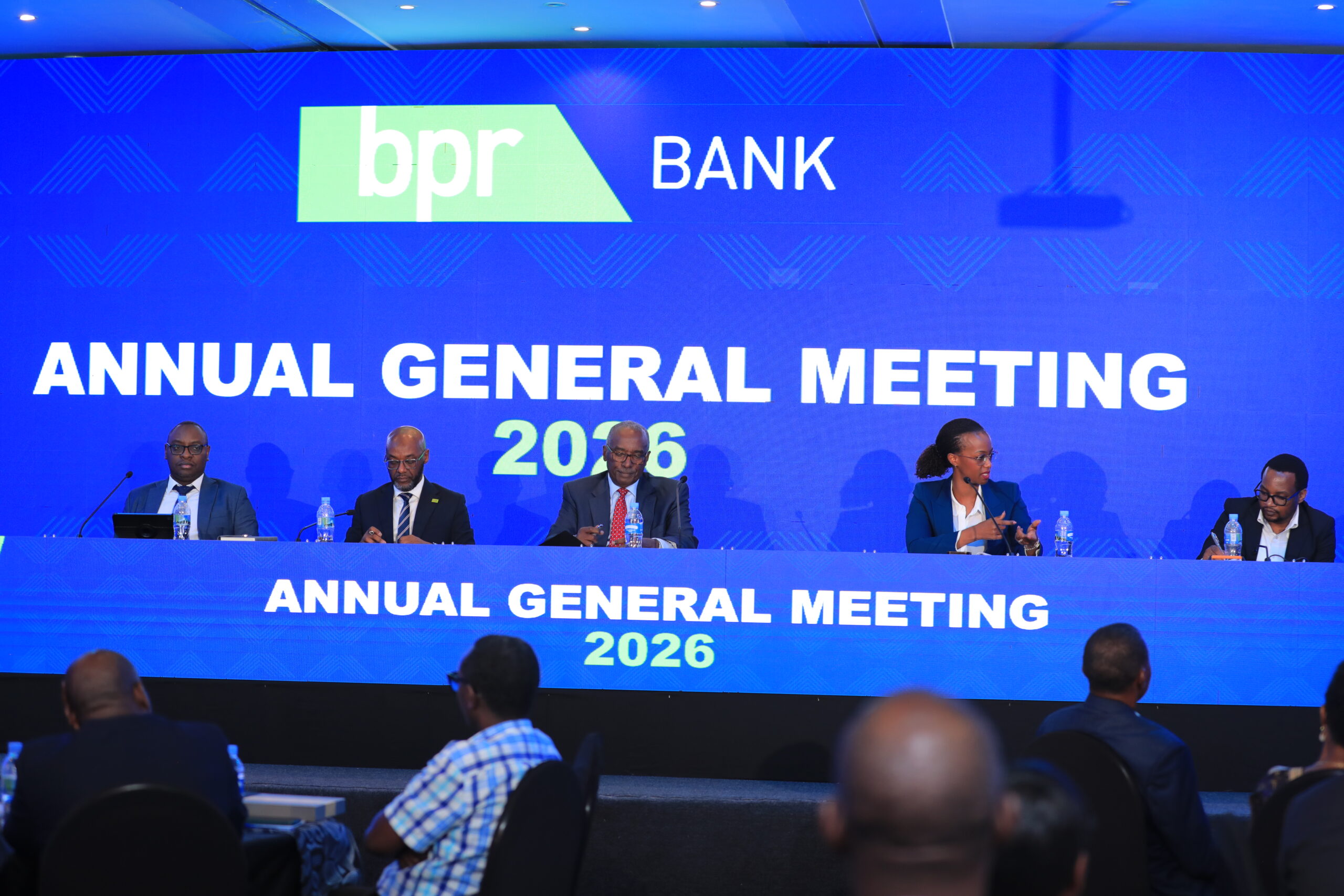
Shareholders approved a dividend payout of more than Rwf4.3 billion during the bank’s annual general meeting in Kigali, marking the second consecutive year the lender has distributed dividends since the merger between Banque Populaire du Rwanda and KCB Rwanda nearly five years ago.
“Our profitability grew year-on-year by 35 percent,” Managing Director Patience Mutesi said after the meeting. “The growth in the balance sheet was driven by our growth in lending.”
The performance highlights the rapid expansion of Rwanda’s banking industry as lenders increasingly position themselves to finance the country’s long-term economic transformation agenda, including infrastructure, housing, agriculture and digital services. Rwanda’s economy has remained among Africa’s fastest growing despite rising global uncertainty, inflationary pressures and higher operating costs in the financial sector.
BPR, which traces its roots to Rwanda’s cooperative banking movement, said its extensive branch network continues to give it an advantage in reaching retail customers and businesses outside Kigali at a time when competition among lenders is intensifying.
The bank now counts more than 528,000 minority shareholders who collectively own 12.44 percent of the lender, while KCB Group controls the remaining 87.56 percent.
Chairman George Rubagumya said the lender’s transformation since the merger has significantly strengthened its capital base, profitability and operational scale.
“People who have been with Banque Populaire from its formation are saying they had never seen a dividend paid,” Rubagumya said. “In five years, we are paying a dividend for the second time.”
Executives said the bank is increasingly balancing large corporate transactions with expansion into small and medium-sized enterprises, which Rwanda views as central to employment creation and economic development.
“SMEs being the cornerstone of the development of this country are where we want to play very actively,” Mutesi said. “Small businesses, medium-sized businesses and large businesses across all sectors.”
The lender has already emerged as one of Rwanda’s most active arrangers of large infrastructure financing. Rubagumya said BPR played a lead role in mobilizing financing support tied to the construction of the new Bugesera International Airport, one of Rwanda’s biggest infrastructure projects.
The bank coordinated a syndicate of four lenders to issue guarantees worth about Rwf322 billion connected to the airport project, drawing on liquidity across KCB Group’s regional subsidiaries.
“BPR played the lead role as the lead arranger of that financing,” Rubagumya said. “That happens because we have the group muscle.”
The comments underscore how regional banking groups are increasingly using cross-border balance sheets to fund strategic infrastructure developments in East Africa, where local banks often face limitations in long-term dollar liquidity.
Mutesi said the lender expects future growth to come from a combination of corporate banking, SME lending and digital financial services. The bank has invested heavily in digital lending platforms and automation as it seeks to improve customer experience while controlling operating costs.
“In the future we’re seeing a lot of growth in digital lending,” Mutesi said. “We’ve invested significantly in digital lending platforms.”
She said digitization is also helping the bank streamline internal operations, from loan approvals and account opening to payments and transfers, improving efficiency at a time when banks face rising funding and operational pressures.
“The issue that most bank managements are dealing with is how can we continue to be efficient in delivering our service, but also protect shareholder value,” Mutesi said. “We can only do that by digitizing both on the backend and on the frontend.”
Agriculture financing is also expected to become a major growth area for the lender. BPR said it has identified priority value chains including coffee, tea, rice, Irish potatoes, dairy and horticulture, while working with development finance institutions to reduce lending risks in the sector.
Mutesi said the bank secured a 5.6-million-euro portfolio guarantee facility from Denmark’s development agency to support SME lending and fully utilized the facility within nine months before it was increased to 15 million euros.
Despite the strong outlook, executives cautioned that the operating environment remains challenging. Mutesi cited cybersecurity threats, credit risks and geopolitical tensions among the biggest concerns facing the lender over the next year.
“Cybersecurity is a risk that keeps us awake at night,” she said.
Rising fuel prices and inflationary pressures linked to global geopolitical tensions are already affecting some customers, particularly those in transport and logistics, according to the bank.
“What is happening internationally with fuel prices going up, we’ve already seen customers raising alarm around the increased fuel prices,” Mutesi said.
Still, the lender expects earnings momentum to remain strong through 2026 as loan demand continues to grow across Rwanda’s economy.
“We expect that by the end of this year we should have more than double-digit growth,” Mutesi said. “The profit after tax was Rwf40.8 billion. This year we expect it to be at least 20 percent above that.”