MTN Rwanda Plc is counting on financial technology, data and enterprise services to drive growth in the second half of the year as the telecom operator prepares to increase investment in 5G and network infrastructure while amid mounting cost pressures.
The company delivered a strong first half, with service revenue rising 21.9 percent to Rwf167.5 billion in the six months through June, while EBITDA climbed 30.4 percent to Rwf70.5 billion. Adjusted free cash flow rose 38.7 percent to Rwf59.3 billion, giving the company what Chief Financial Officer John Bugunya described as a stronger financial base for continued investment.
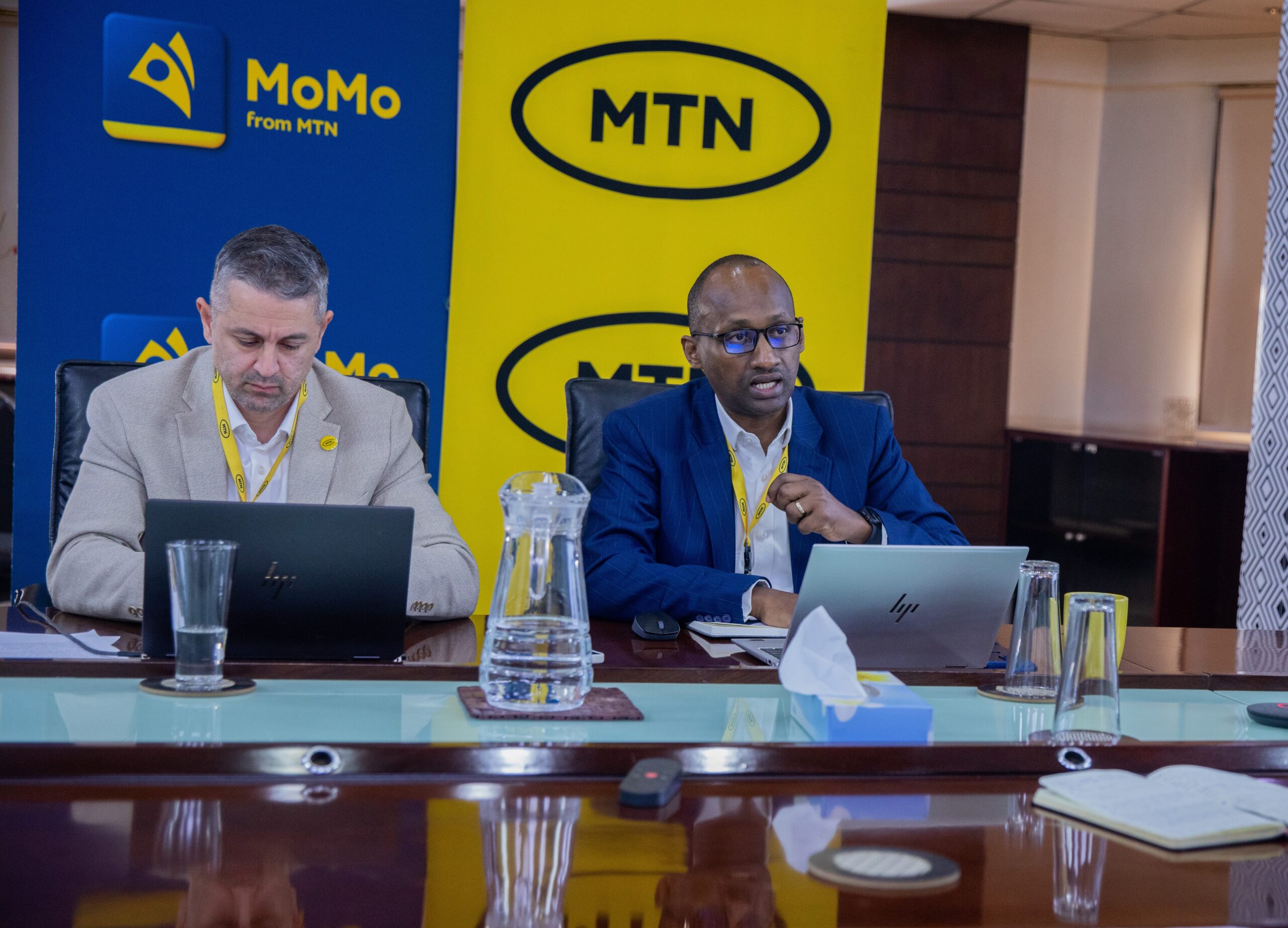
“Our H1 2026 results show the value of pairing our commercial growth with our financial discipline,” Bugunya said in an interview. “While we’ve held our capital expenditure steady, that has given us a very solid financial base to keep investing in the network and in future digital infrastructure that our customers, businesses and communities depend on.”
The results come as MTN Rwanda seeks to turn rising digital consumption into longer-term revenue growth while expanding its role beyond traditional telecommunications into financial services and digital infrastructure. Its subscriber base increased 11.4 percent to 8.7 million, while active data subscribers rose 14.5 percent to 2.7 million and active Mobile Money users increased 14.9 percent to 6.4 million.
MoMo Becomes the Growth Engine
The strongest growth came from Mobile Money, underscoring the extent to which Rwanda’s increasingly cashless economy is reshaping MTN’s business.
Mobile Money revenue increased 31.3 percent to Rwf90.1 billion, accounting for 53.8 percent of MTN Rwanda’s service revenue, compared with 49.9 percent a year earlier. Active merchants increased 19.2 percent to 682,000, while advanced services including lending and remittances grew 28.1 percent and represented 28.4 percent of Mobile Money revenue.
Chief Executive Officer Monzer Ali said the company’s Mobile Money strategy is increasingly focused on moving customers from basic transactions toward a broader ecosystem of financial and business services.
“When we started 15 years ago, mobile money was just a cash-out,” Ali said. “Now mobile money ecosystem has evolved to a way of life.”
The next phase, he said, will involve expanding savings, lending, insurance-related services and bulk payments while helping businesses digitize their transactions from end to end.
MTN is working with banks including BPR, Bank of Kigali and NCBA on financial products, Ali said, while also seeking to digitize entire business value chains, from payments to suppliers and employees to utility bills.
“This is how mobile money right now is evolving. And that’s the next phase of growth,” Ali said. “Indeed, mobile money is a growth engine for us as MTN Rwanda.”
MTN’s strategy also comes as Rwanda pushes toward a more cashless economy, with Ali crediting government regulation and the central bank’s efforts to encourage digital payments.
Data Growth Outpaces Monetization
Data is another area where MTN sees significant room for expansion, although the company’s results highlight a challenge facing telecom operators across emerging markets: rapidly increasing usage does not necessarily translate into equivalent revenue growth.
Data traffic surged 63.6 percent in the first half, while data revenue increased 14.3 percent to Rwf26.7 billion. The number of customers using MTN’s 4G network rose almost 41 percent to 1.9 million.
Ali acknowledged the gap between usage and monetization, but said MTN is deliberately prioritizing network expansion and affordability to build the customer base before extracting greater value from increased consumption.
“We are in a stage of building the base, making sure data is affordable while we expand the network,” he said. “We do believe revenue will come. Revenue is an output. Revenue is not an input.”
The company is using customized and lower effective-rate data packages to bring more customers into the internet economy. Smartphone penetration in Rwanda remains below 45 percent, according to Ali’s estimate, leaving significant room for further adoption.
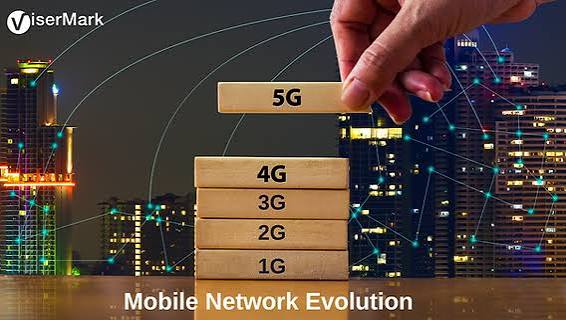
MTN has also expanded its network. Ali said all of the company’s sites now have 4G, compared with about 400 sites without 4G in the middle of last year. The company launched 5G last year and has since expanded the technology beyond Kigali to Musanze.
“The input (is to) build the network, put the right offer to the market. We are confident revenue will come. And that yield will improve,” Ali said.
5G Spending to Remain Strategic
The rapid expansion of connectivity will require continued investment, even as MTN seeks to maintain financial discipline.
Capital expenditure excluding leases was Rwf11.2 billion in the first half, broadly unchanged from a year earlier. Bugunya said the important change was not necessarily the size of the spending envelope but how it was being allocated.
In the first half of 2025, more than a third of capital expenditure went toward building core network capacity. This year, a larger focus has shifted toward the radio access network, with the aim of improving customer experience as the company adds subscribers and data traffic.
“The spend may not be going up, but is it being targeted towards the priority areas that will unlock value for data and for FinTech customers, as well as voice customers?” Bugunya said.
He added that MTN is confident it can maintain its existing capital-expenditure envelope while directing funds toward areas capable of generating commercial returns over the short and medium term.
Still, Ali cautioned against interpreting the lower capital intensity as a signal that MTN intends to permanently reduce investment.
“We are in a CAPEX-intensive business,” Ali said. “We cannot save on CAPEX investment, because that CAPEX investment is what’s going to secure our growth in the medium and the long term.”
5G will be central to that spending. Ali said the company intends to expand 5G across primary and secondary cities, although the technology remains expensive.
About 90 percent of MTN’s current 5G rollout is in Kigali, he said, while the network has also been extended to Musanze. The company is working with the regulator on spectrum reaffirming that could help optimize and accelerate deployment, and Ali said MTN is optimistic about achieving full 5G coverage in Kigali in the near term.
The company sees 5G as more than a consumer service. Ali said it could provide a wireless alternative to fiber for homes and businesses where laying physical fiber is too expensive.
“We look at 5G more as a home broadband solution than a consumer solution,” he said.
Enterprise, FinTech and Data Lead H2 Outlook
For the second half, Ali expects FinTech, enterprise services and data to provide the strongest growth, followed by voice. Digital services are expected to record the highest percentage growth, albeit from a smaller base.
The company is also facing a more challenging cost environment. Ali cited higher fuel and health costs and rising inflation as factors that could put pressure on the business in the second half.
That makes expense efficiency a central priority.
“The big focus for us in H2 is the expense efficiency, trying to do more with less to maintain a healthy bottom line,” Ali said.
The company’s ability to do that will be important after EBITDA growth outpaced revenue growth in the first half. EBITDA rose 30.4 percent, compared with 21.9 percent growth in service revenue, while profit after tax increased 191.2 percent to Rwf17.2 billion, reflecting revenue growth, margin expansion and tighter cost management, according to Bugunya.
Building Rwanda’s Digital Economy
The executives see MTN’s strategy as closely linked to Rwanda’s broader digital transformation ambitions.
Ali said connectivity, including 4G, 5G, fiber, fiberization and home broadband, remains the foundation of that transformation. Home broadband connections increased from about 11,000 homes last year to 13,300 this year, with growth accelerating.
MTN also sees its Mobile Money platform as a key pillar of financial inclusion. Ali said the company has an 87 percent market share in mobile money, while interoperability and the rollout of e-cash are expected to further strengthen its position in Rwanda’s digital payments ecosystem.
“Connectivity is the foundation for everything related to digitalization,” Ali said.
Bugunya similarly linked the company’s investment plans to Rwanda’s efforts to digitize public and private services, automate transactions and expand digital payments.
For MTN, the strategy ultimately extends beyond financial returns. The company says its expanding network, smartphone adoption, Mobile Money ecosystem and digital services are intended to help connect people, businesses and communities as Rwanda pursues its longer-term development ambitions.
“Our first half results are strong. It shows strong commercial growth, disciplined execution as well as a stronger free cash flow,” Bugunya said. “This gives us a base to continue investing in the network … including the digital infrastructure and the financial services that customers and businesses depend on.”
For the second half, the challenge will be to sustain that growth while keeping costs under control and investing enough to support the next phase of Rwanda’s digital economy. For MTN Rwanda, that means balancing affordability and network expansion today against the prospect of higher data, FinTech and enterprise revenues tomorrow.
“Strong financial performance will help us make the necessary investments,” Bugunya said, while continuing to position MTN as a responsible corporate institution supporting what he described as an “inclusive and digitally enabled future.”