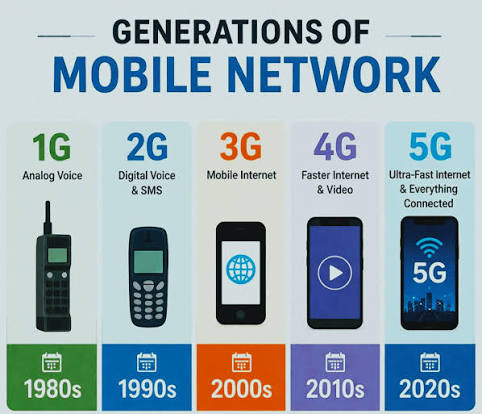
Rwanda will begin phasing out its ageing 2G and 3G mobile networks over the next year in a move aimed at accelerating the expansion of faster 4G and, eventually, 5G services, as the government seeks to strengthen the country’s digital infrastructure and improve connectivity for businesses and households.
Under a roadmap announced Tuesday by the Ministry of ICT and Innovation, 3G services will be switched off nationwide by June 30, 2027, while the retirement of 2G networks will follow once authorities determine the country is ready based on network coverage, service continuity and consumer adoption of compatible devices.
The transition is expected to release valuable radio spectrum currently occupied by legacy technologies, enabling mobile operators to deepen investment in nationwide 4G coverage and progressively roll out 5G networks. The government said consumers should benefit from faster internet speeds, improved call quality, fewer dropped connections and more reliable access to digital services including mobile banking, e-government platforms, online education and digital healthcare.
The Ministry of ICT and Innovation (MINICT) and the Rwanda Utilities Regulatory Authority (RURA) said the migration will be coordinated with mobile network operators, public institutions and the private sector to minimize disruption.
The rollout will be guided by several readiness indicators, including nationwide availability and quality of 4G services, uninterrupted access to voice calls, text messaging, mobile money and emergency services, the successful migration of services that still rely on USSD, 2G or 3G technologies, and the availability of affordable 4G-compatible devices for consumers.
Pilot shutdowns will take place during 2026 ahead of the nationwide 3G switch-off, while authorities continue expanding 4G coverage and monitoring the transition.
The government urged mobile subscribers to verify that both their handsets and SIM cards support 4G technology, saying mobile operators will notify customers whose devices require upgrading. Businesses and public institutions that continue to rely on 2G- or 3G-based systems, including those in payments, transport, utilities, healthcare, public safety and government services, have also been advised to begin replacing or upgrading their equipment.
The move aligns Rwanda with a growing number of countries retiring older mobile technologies to improve spectrum efficiency and support the rapid growth in data consumption as digital services become increasingly central to economic activity.