IMF says Rwanda passed on more than the benchmark increase in fuel prices as higher energy and fertilizer costs threaten regional growth and household purchasing power.
Rwanda’s decision to pass on increases in international fuel prices to domestic consumers is placing the country among the most aggressive adjusters in sub-Saharan Africa, as the International Monetary Fund warns that rising energy costs, expensive borrowing and declining foreign aid are leaving governments with less room to shield households from economic shocks.
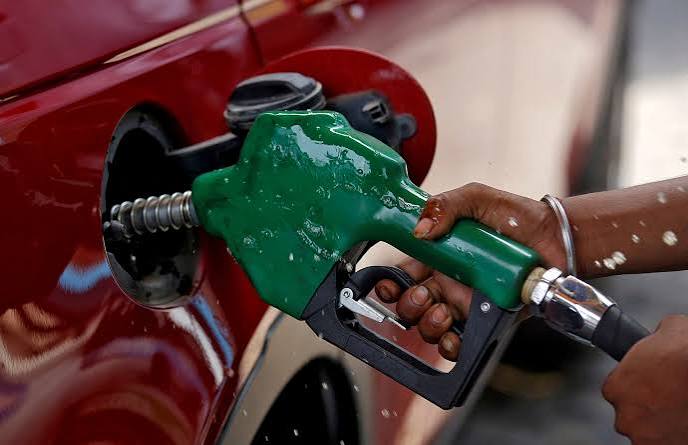
In its October 2026 Regional Economic Outlook Update for Sub-Saharan Africa, the IMF estimates that Rwanda’s retail gasoline price adjustment amounted to 125 percent of the increase in the corresponding international refined-product benchmark between Feb. 23 and Sept. 14. The adjustment for diesel reached 111 percent, according to the report’s comparative analysis of 21 African economies.
The figures measure changes in domestic retail prices relative to movements in international benchmark prices; they are not estimates of fuel subsidies or the overall cost of living. Still, they highlight the extent to which Rwanda has allowed international price pressures to feed into its domestic fuel market.
“Rwanda combined substantial price adjustment with monetary tightening and targeted support,” the IMF said, describing the country’s response to the energy shock.
The approach contrasts with policies that attempt to suppress domestic fuel prices through broad subsidies or tax relief. Such measures can protect consumers temporarily but impose costs on government budgets, state-owned enterprises and fuel importers, potentially diverting resources from essential public services and investment.
The IMF cautioned that most fiscal measures announced across the region in response to higher fuel costs were temporary, but only about one in seven was classified as targeted. Generalized price relief tends to benefit better-off households disproportionately, while its fiscal cost can displace spending that would more effectively protect vulnerable groups, the report said.
The trade-off comes as the regional economic outlook becomes more uncertain. Sub-Saharan Africa is projected to grow 4.5 percent in both 2026 and 2027, unchanged from 2025, but the headline figure masks diverging performances across economies. Growth in non-resource-intensive countries is expected to ease to 6 percent this year from 6.4 percent in 2025, while oil exporters are projected to expand 4.1 percent.
Inflationary pressures are also building. The median inflation rate across the region is forecast to rise to 4.3 percent in 2026 from 3.4 percent in 2025, before reaching 5 percent in 2027. Higher fuel and transport costs are expected to feed into food prices as more expensive fertilizer and other imported inputs work their way through supply chains.
The report warns that the effects could persist even after international energy prices ease, particularly where currencies depreciate, credit is scarce and farmers have limited ability to substitute more expensive inputs.
For Rwanda and other economies exposed to imported energy costs, the policy challenge is to contain inflation without undermining household welfare or productive investment. The IMF said monetary tightening may be needed across much of the region to prevent temporary price shocks from becoming entrenched, especially where inflation is already above target and broader price pressures are expected to persist.
Governments also face tighter budget constraints. The IMF projects the median public-debt ratio across sub-Saharan Africa will decline to 51.7 percent of gross domestic product in 2026, from 53 percent in 2025. But interest payments are expected to absorb a median of about 12 percent of government revenue over 2025–2027, limiting the resources available for public services, investment and emergency support.
The pressure is compounded by shrinking external assistance. After falling by roughly a quarter in 2025, bilateral aid to the region is projected to decline by a further 12 percent in 2026, according to estimates cited by the IMF from the Organization for Economic Co-operation and Development.
The fund urged governments to preserve fiscal discipline while directing assistance toward vulnerable households, rather than relying on broad subsidies that can become costly and difficult to withdraw. It also called for protecting high-return investment in electricity, digital connectivity, skills and the business environment to support productivity and private-sector growth.
“Protecting productive investment and enabling private-sector growth are essential to make future shocks less costly and improve longer-term living standards,” the IMF said in its outlook summary.
For Rwanda, the figures illustrate the tension between adjusting domestic prices to reflect international costs and limiting the burden on households and businesses. The report documents the country’s fuel-price response but does not quantify its specific impact on household purchasing power, nor does it provide a Rwanda-specific growth forecast in this regional update.