Africa’s rapid digital expansion is creating new opportunities for young people to participate in governance and peacebuilding while exposing the continent to deeper risks around surveillance, disinformation, exclusion and control of data and technology.
Those competing forces will take center stage in Nairobi this week as African innovators, civic technologists, peace practitioners, digital-rights advocates and funders meet to examine how technology can strengthen accountable institutions without reproducing the inequalities it is increasingly being used to address.
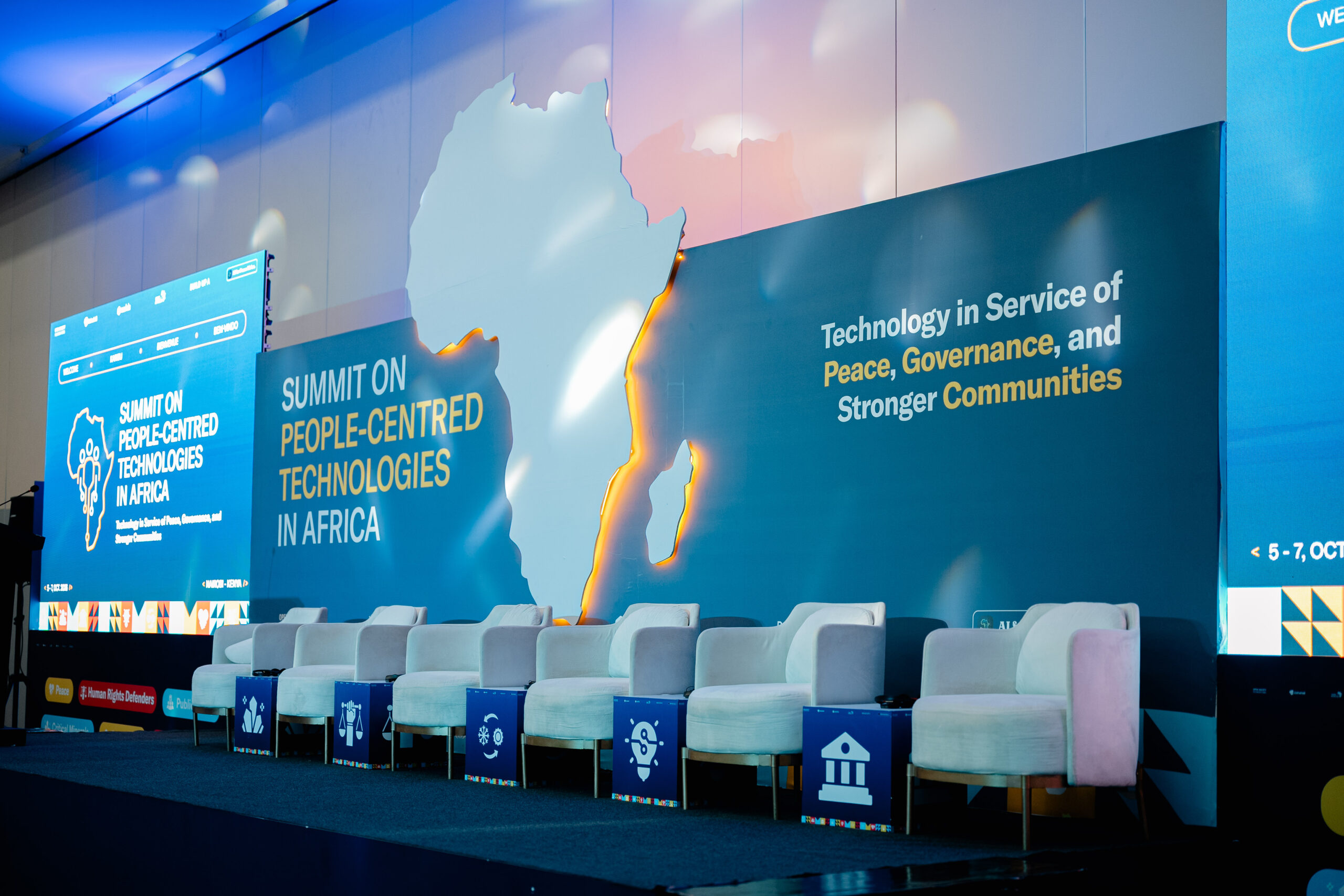
The three-day convening, running Oct. 5–7, is being proposed by Code for Africa, Ushahidi and Open Society Foundations–Africa and will focus on people-centred technologies, youth leadership, local ownership and justice-led innovation.
Africa’s demographic profile makes the debate particularly urgent. About 60% of the continent’s population is under 25, while more than 400 million Africans are between 15 and 35, according to the concept note. At the same time, internet use reached about 38% in 2024, while mobile broadband coverage extended to roughly 86% of the population.
That combination of a young population and expanding connectivity is opening space for youth-led digital organizing, civic participation and new approaches to peacebuilding. But it is also widening questions over who has access to technology, who controls the data it generates and who gets a voice in decisions increasingly mediated by digital systems.
Technology is already influencing elections, public discourse, policing, extractive industries and participation in governance and peace processes, according to the organizers. The same tools that can improve access to information and accountability can also expose citizens to surveillance and disinformation, with women and marginalized communities particularly vulnerable to digital exclusion.
The Nairobi discussions will therefore move beyond the increasingly familiar idea of “tech for good.” Instead, organizers want to examine how digital tools, data systems and civic innovations can support locally defined priorities and strengthen community agency rather than reinforce elite control or exclusion.
A key theme will be local ownership. African innovators and communities affected by conflict and governance challenges are being positioned not merely as users of technology, but as co-designers, governors and long-term stewards of the systems intended to serve them.
The conference will also examine the growing intersection between technology, critical minerals and Africa’s economic future. Digital tools could help improve transparency and traceability in extractive economies, while strengthening environmental justice and community accountability as demand for critical minerals grows.
That is particularly significant as Africa becomes more central to global debates over the minerals needed for the energy and technology transitions. The organizers argue that the continent’s position in the global digital economy and its critical-minerals resources require stronger accountability mechanisms linking technology, resource justice and governance.
The agenda will also address the risks accompanying digital expansion, including misinformation, data protection, algorithmic bias and digital exclusion. Another focus will be the use of technology in policing and public safety, including how digital systems are changing relations between states and citizens and what rights-based oversight could look like.
Importantly, the organizers intend to move the discussion beyond policy debate. African innovators and community-rooted organizations will have an opportunity to showcase technologies and platforms addressing peace, policing accountability, critical-minerals governance and inclusion, with selected participants engaging practitioners and funders.
The objective is to identify promising African innovations while developing practical approaches to governance, ethics and financing. Organizers also want to determine how technology initiatives can attract funding and scale without losing the community accountability that gives them legitimacy.
The expected outcome is a shift away from technological solutionism toward a model of digital development rooted in local political and economic realities, rights-based governance and African ownership.
For a continent where connectivity is expanding faster than many institutions can adapt, the central question is no longer whether technology will shape Africa’s future. It is who will shape the technology and whose interests it will ultimately serve.