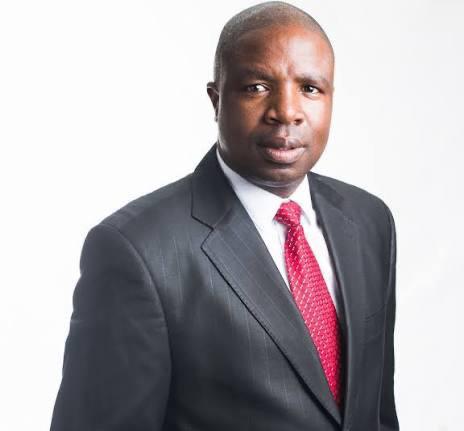
Africa risks repeating the failures of past commodity booms unless governments ensure that the continent’s critical-mineral wealth drives broader economic transformation and benefits communities, according to Deprose Muchena, director of Resources Futures in Africa at the Open Society Foundations.
The warning comes as global powers and industries race to secure supplies of minerals such as cobalt and copper that are increasingly important to technology and the energy transition. African countries hold about 30% of global critical-mineral deposits, according to the dialogue referenced by Muchena.
“The world is entering a new commodity boom as governments and industry moves to secure the minerals needed for building the technology and energy systems of tomorrow,” Muchena said.
The competition for resources is likely to intensify geopolitical tensions, particularly between major economies in the OECD and China, while increasing risks for mineral-producing countries and communities living near extraction sites, he said.
Muchena said African governments should move away from treating mining as an isolated extractive industry and instead connect mineral production to the wider economy to generate jobs, industrial development and broader prosperity.
“Africa’s minerals sector must be integrated into the wider economy if it is to drive real transformation,” he said.
The approach should also include stronger environmental and human-rights safeguards, greater participation by communities hosting mining projects and stronger negotiating capacity among African producers, according to Muchena.
He argued that African countries should also abandon fragmented approaches to negotiating mineral deals and instead strengthen collective bargaining through regional and continental cooperation.
“Everything rises and falls on leadership,” Muchena said, calling for political leadership that is accountable to citizens and focused on delivering public services and human rights.
The mineral rush is unfolding alongside broader concerns about democratic governance and human-rights protections across the continent. Participants at a Southern Africa dialogue on the future of human rights cited inequality, poverty, exclusion, democratic backsliding, shrinking civic space, climate impacts and declining trust in institutions as threats to progress.
Muchena said the region faces a triple burden of governance gaps, political leadership that is insufficiently committed to improving people’s material conditions, and limited government capacity to adequately fund human-rights mandates. He said governments need to take greater responsibility for financing human rights rather than viewing it primarily as a donor obligation.
The debate also comes as Africa confronts the rapid expansion of digital technologies and artificial intelligence, which Muchena said present both opportunities and risks. While technology can expand access to education, participation and economic opportunity, it can also increase surveillance, misinformation, data exploitation, algorithmic bias and exclusion.
“Africa must embrace and indeed entrench a human rights-based digital governance that promotes transparency, accountability, inclusion, affordability, accessibility, and digital sovereignty,” he said.
Muchena said Africa’s ability to shape the next phase of its development will ultimately depend on whether its governments and institutions can convert the continent’s growing strategic importance into stronger bargaining power and tangible improvements in citizens’ lives.
Africa is “no longer at the margins of world affairs,” he said, as the continent becomes increasingly central to global economic, political and strategic realignments.
The challenge now is to ensure that its natural resources, technological transformation and growing geopolitical importance translate into broad-based development rather than another cycle of extraction without sufficient benefits reaching African communities.