Country ranks 47th among 56 Commonwealth nations for youth AI readiness, highlighting gaps in skills, access and data needed to unlock economic gains
Rwanda could add $237 million to the level of its Gross Domestic Product over the next decade by capitalizing on artificial intelligence, according to a new study that also warns the country lacks sufficient data to determine whether young people are prepared to benefit from the technology.
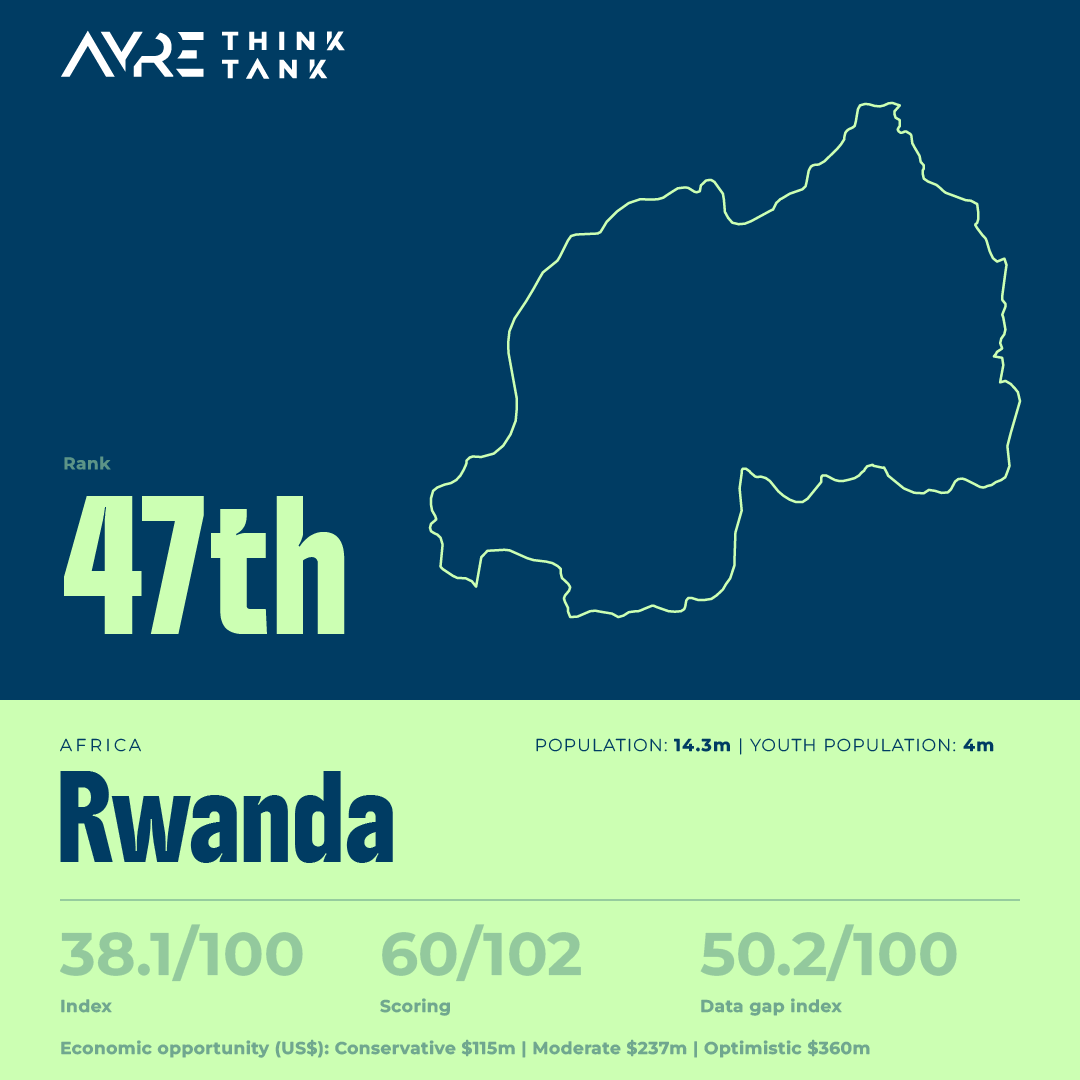
The East African nation ranked 47th among 56 Commonwealth countries in the 2026 Commonwealth Youth AI Readiness Index, scoring 38.1 out of 100, below the study’s readiness benchmark of 53, according to research released Tuesday by the Ayre Think Tank.
The potential economic gain could reach $360 million under an optimistic scenario, while a conservative estimate puts the increase at $115 million, the report said. The figures represent possible increases in the level of GDP after 10 years, rather than annual growth or cumulative gains over the period.
The findings highlight a gap between Rwanda’s progress in expanding digital infrastructure and its preparedness to translate artificial intelligence into broader economic opportunities. While 4G mobile network coverage reaches 98.8 percent of the population and data is comparatively affordable, electricity access stands at 72 percent, according to the research.
Rwanda has approximately 4 million people aged 15 to 29, a demographic that could benefit from AI-driven opportunities in employment, entrepreneurship and education. Yet researchers said limited public information on how young Rwandans are actually using AI makes it difficult to assess their readiness and identify where investment would have the greatest impact.
The index draws on 1,128 research sources and examines conditions affecting young people across all 56 Commonwealth countries.
“I’ve spent my life in businesses where new technology changes everything, and I know you can’t stand still. AI is going to change how we work, how we do business and how wealth is created,” Calvin Ayre, founder of the Ayre Think Tank, said in a statement.
“But this is not a race that only the biggest or richest countries can win. What matters is giving young people the skills and the chance to get ahead – whether to start businesses, find jobs or build something for themselves,” he said.
Only 15 Commonwealth countries met the study’s readiness benchmark, with Singapore leading at 77.6 points, followed by Malta and Australia. Rwanda’s score placed it below regional peers including Kenya, which ranked 22nd with 48.7 points, Uganda at 23rd with 47 points and Tanzania at 25th with 45.5 points.
Skills and Infrastructure Gaps
The research identifies five priorities for countries seeking to maximize AI’s economic potential: affordable and reliable technology access, practical education, stronger links between training and employment, AI tools adapted to local languages and needs, and safeguards allowing young people to challenge automated decisions.
Professor C. Justin Robinson, Pro Vice-Chancellor and Campus Principal of the University of the West Indies, Five Islands Campus, said access to AI must be accompanied by the ability to influence how the technology is developed and governed.
“We need to make sure that the next generation will be able to do more than just consume AI products made elsewhere,” Robinson said. “Access must come with its own agency and a real equitable stake in how these systems are governed.”
The study argues that young people should be equipped to question AI tools, improve them and develop alternatives suited to their own needs.
For Rwanda, the findings point to the importance of moving beyond connectivity and expanding practical AI education, improving access to reliable electricity and generating evidence on how young people use the technology.
The economic estimates were developed by applying the International Monetary Fund’s low and high 10-year GDP-level effects for broad economic groups to World Bank national GDP figures for 2025. The moderate scenario represents the midpoint of those estimates.
The researchers caution that the projections are illustrative rather than country-specific forecasts. They also do not estimate how much of the potential economic benefit would accrue directly to young people.
The index assesses seven pillars using 102 indicators, covering technology access, digital capability, AI use, education, employment, enterprise, rights and safeguards. A further pillar on critical judgement and human agency could not be scored because comparable evidence was insufficient.
The report’s central message is that infrastructure alone will not determine which countries benefit from artificial intelligence. Skills, reliable access, relevant technology and the ability to use evidence to guide policy will also shape how much economic value the technology creates.